Wed Dec 10 2025
Rajasthan Digifest X TiE Global Hackathon
The Rajasthan Digifest X TiE Global Hackathon is a 30-hour national level innovation challenge designed to empower young developers, entrepreneurs, and creators from across Rajasthan to build scalable view more...
offline Hackathon 2 - 5 Team Members View full Schedule
Wed Dec 10 2025
Rajasthan Digifest X TiE Global Hackathon
The Rajasthan Digifest X TiE Global Hackathon is a 30-hour national level innovation challenge designed to empower young developers, entrepreneurs, and creators from across Rajasthan to build scalable
Wed Dec 10 2025
Offline Hackathon 2 - 5 Team Members View full Schedule
Innovation Challenges
Digital Agriculture & Farmer Support Ecosystem
Develop digital tools to support farmers through better resource allocation and data-driven insights.
Smart Health Records & Emergency Response Management
Integrate health data and improve emergency service efficiency.
Smart Road Infrastructure Monitoring & Maintenance System
Use technology to assess, monitor, and maintain the quality and safety of roads.
Smart Surveillance & Public Safety Enhancement
Build secure and scalable public–private CCTV integration for better city safety.
Tourism Intelligence & Footfall Analytics System
Rajasthan Tourism Department
Unified Civic Issue Detection & Grievance Redressal Platform
Create a central system to report and resolve everyday civic issues quickly.
Water Governance, Urban Infrastructure & Smart Utilities
Public Health Engineering Department (PHED), Government of Rajasthan
Digital Agriculture & Farmer Support Ecosystem
Develop digital tools to support farmers through better resource allocation and data-driven insights.
Smart Health Records & Emergency Response Management
Integrate health data and improve emergency service efficiency.
Smart Road Infrastructure Monitoring & Maintenance System
Use technology to assess, monitor, and maintain the quality and safety of roads.
Smart Surveillance & Public Safety Enhancement
Build secure and scalable public–private CCTV integration for better city safety.
Unified Civic Issue Detection & Grievance Redressal Platform
Create a central system to report and resolve everyday civic issues quickly.
Water Governance, Urban Infrastructure & Smart Utilities
Public Health Engineering Department (PHED), Government of Rajasthan
Schedule
6 Dec 2025
Registrations Open
Thu Dec 11 2025
Registrations Close
Final deadline to register for the hackathon.
Thu Dec 11 2025
Idea Submission Close
Last date to submit ideas through the portal.
Fri Dec 12 2025
Last announcement of teams
Final list of selected teams for the 30-hour offline hackathon.
Sat Dec 13 2025
Inauguration
Opening ceremony with guests and organizers.
Sat Dec 13 2025
Opening Keynote
Kick-off address for the hackathon.
Sat Dec 13 2025
Hackathon Start
30-hour hackathon begins; mentors available.
Sat Dec 13 2025
Lunch & Networking
Lunch break and networking with mentors.
Sat Dec 13 2025
Workshop
Product, design or technical workshop.
Sat Dec 13 2025
Checkpoint 1
First evaluation checkpoint with mentor scoring and feedback.
Sat Dec 13 2025
Dinner
Dinner break for all participants.
Sun Dec 14 2025
Midnight Snack
Snacks provided during the night-building sprint.
Sun Dec 14 2025
Midnight Checkpoint
Second evaluation checkpoint.
Sun Dec 14 2025
Breakfast
Breakfast served at the venue.
Sun Dec 14 2025
Final Checkpoint
Last build review before submission.
Sun Dec 14 2025
Lunch
Lunch break before pitching begins.
Sun Dec 14 2025
Pitching Sessions
Shortlisted Teams present to jury members.
Sun Dec 14 2025
Closing Ceremony
Hackathon closing & announcement of finalists.
Sun Jan 04 2026
Grand Finale @ TiE Global Summit
Winners awarded on the TiE Global Summit main stage.
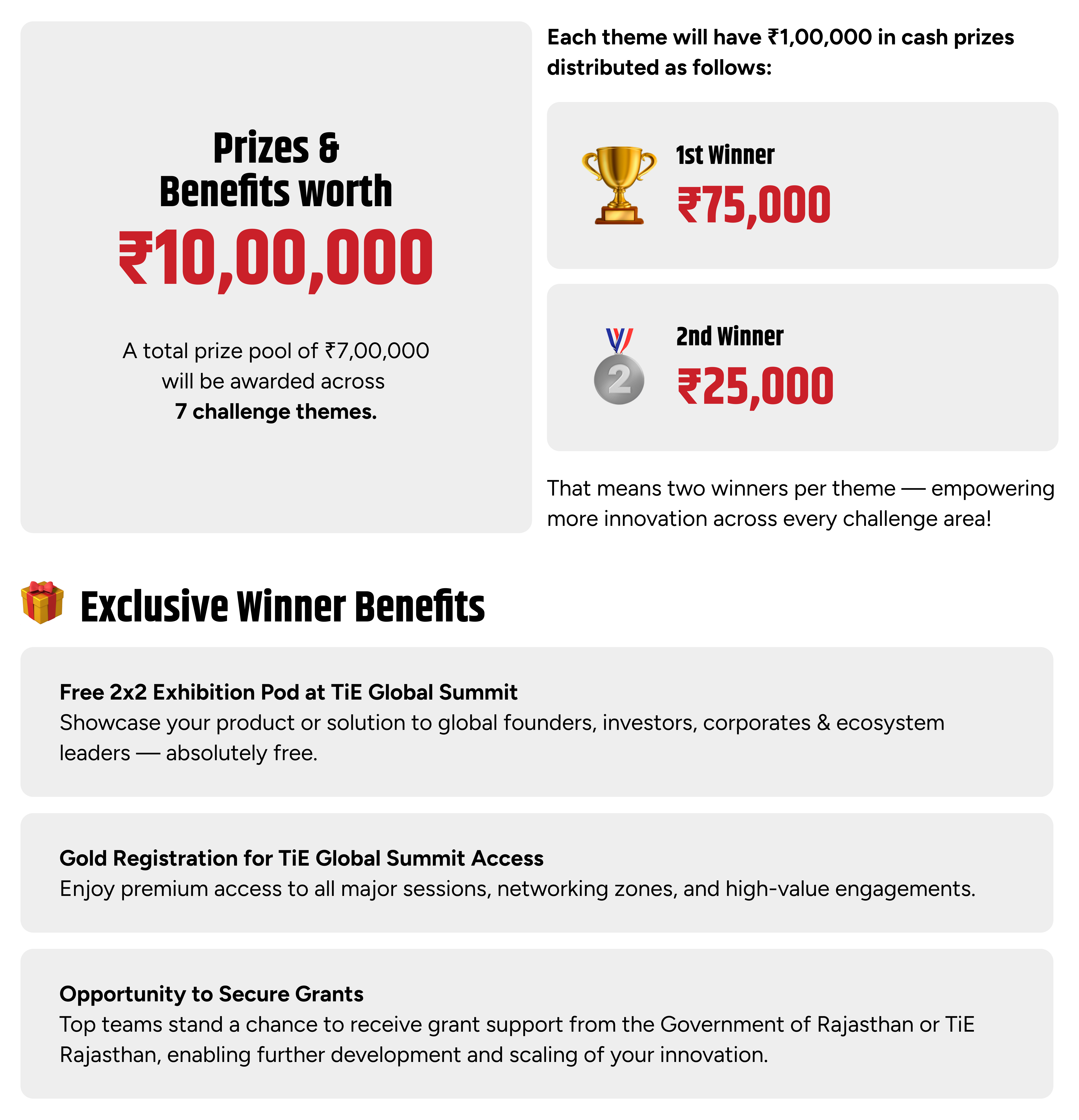
Rewards and benefits
Partners


Venue Partner
Powered by
Frequently Asked Question



Directory Listing of Mobile Marketing Ecosystem in Asia
Build a consumer driven marketplace referred here as an interactive marketplace since al the players in the system may interact for example the marketer , the channel, the media, , the vendor, and the end user.
It will be a community driven platform which lists the players involved in Mobile Advertising and marketing in Asia , build a digital interactive platform which thrives on listing done by users including the platform and service providers who could list themselves up and could get reviewed by marketers who have used the various services provided by these service providers.
The marketplace will be design to be a multi platform-classified marketplace for end user to learn the various player in the industry /segment and to be able to pull together a solution between them
The platform, built exclusively for MMA would allow users them to understand the full services that a particular vendor provides.
The interactive platform could be a one stop platform for all the marketers and consumers and will allow them to choose the best service providers in the category
This platform will maintain the latest ecosystem map of all the various service provider in the marketplace.
The demonstration of the listing should be in a matrix form with all the details pertaining to it, just a click away.
Participants are expected to come up with an interactive directory listing of these service providers, which will largely help in keeping a track of the marketing industry, the directory must have the interactive mapping of each entity.
The objective of the project is to choose and application that will help conduct an user experience that is easy to use and navigate . it should have a provision to practice primary search, and have a journey map thru the design to explore the entire tool:
- User experience from start to end should incorporate selection create to add or shortlist any parts of the marketplace to customise ones own ideal solution between various part of the ecosystem.
- Design thinking to design doing
- Creating account is mandatory
- When listing the company, users are required to fill in mandatory fields, the indicator of mandatory fields
- New Category within the ecosystem can be added by the user , subject to approval by MMA
- Promote listing as a feature
- Sorting listing should be category, alphabetic and country wise etc ; filters for sorting to eb provided.
- Search to be enabled
-
Key focus to be given to:
- User Interface / In app experience
- Boosting and promotion
- Rating system
- Featured listing